

Massage After a Long Flight or Road Trip: What Your Body May Be Feeling
By Siam Thai Wellness Journal
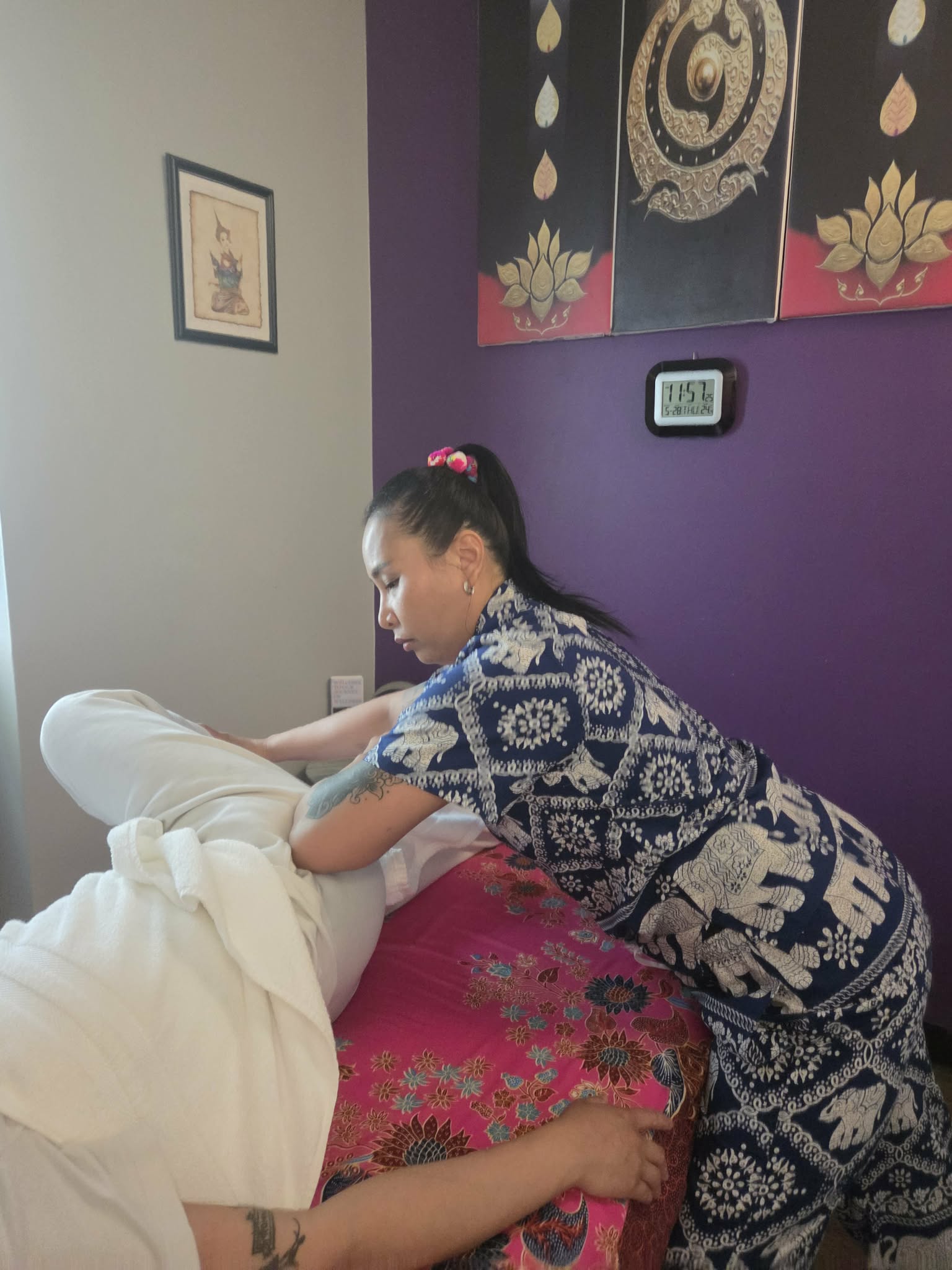
After a long flight or road trip, you may notice that your neck, back or hips feel stiff, or that you simply want room to move again. Hours in one position, carrying luggage, unfamiliar beds and a disrupted routine can make the end of a journey feel tiring.
A massage may offer a comfortable pause after travel, but it cannot establish the cause of pain or replace medical assessment. The first step is to distinguish ordinary feelings of stiffness from symptoms that need attention before hands-on treatment.
Why travel can leave you wanting a change of position
Plane seats and car seats give you fewer options to move around than a normal day might. You may spend a long time with your knees bent, turn your head to rest against a window or hold your shoulders differently while driving. Handling bags adds another change in activity.
Feeling stiff afterward does not mean your body is out of alignment or that it needs forceful work to reset it. Avoid assigning a cause based on a blog or assuming one massage technique will undo everything about a long journey.
Know when massage is not the next step
Long periods of limited movement can increase the risk of a blood clot, particularly when other risk factors are present. New, unexplained swelling, pain, warmth or redness in one leg needs prompt medical assessment. Do not massage a swollen or painful calf to try to work it out.
Sudden breathlessness, chest pain, coughing up blood or fainting requires emergency medical help. These symptoms should not be treated as ordinary travel fatigue. Seek healthcare advice for severe or worsening pain, new weakness or numbness, or an injury sustained during the trip.
If you feel unwell with a fever or contagious illness after travelling, postpone massage. People with a history of blood clots, recent surgery, pregnancy or other relevant health concerns should ask a healthcare professional about their particular situation rather than relying on general travel advice.
What to tell your therapist before the session
Explain that you have recently travelled and describe what feels uncomfortable, when you noticed it and whether it is changing. Mention any unusual swelling, recent injury, surgery, medical advice or medication that may affect treatment. You do not need to arrive with a self-diagnosis.
- Say whether sitting, lying down or changing position feels uncomfortable.
- Point out areas you would prefer the therapist to avoid.
- Ask for a gentle start if you are tired or sensitive.
- Discuss whether assisted stretching feels appealing or whether you prefer less movement.
Strong pressure is not automatically more suitable after a long trip. There is no need to tolerate a deep stretch because you have spent hours sitting.
Leave space to settle back into your routine
If you are arriving in Edmonton after an overnight flight or a demanding drive, consider whether you would rather rest before attending an appointment. There is no universal waiting period for every traveller; how you feel and your health circumstances matter.
Comfortable everyday movement, changing position when practical, regular meals, drinking according to your usual needs and time to rest may be more useful than filling your arrival day with commitments. Avoid forcing movement into pain or treating massage as a substitute for sleep.
Choose a session for comfort, not a travel cure
Review the available Siam Thai Yoga Massage services and ask about pressure and positioning before booking. Traditional Thai massage may involve assisted movement, while other styles have a different pace and setup.
If there are no symptoms requiring assessment and a massage fits your plans, choose an appointment that leaves you time to arrive comfortably. You can ask for adjustments throughout the visit and stop any technique that does not feel right.