
Thai Oil Massage vs. Traditional Thai Massage: What’s the Difference?
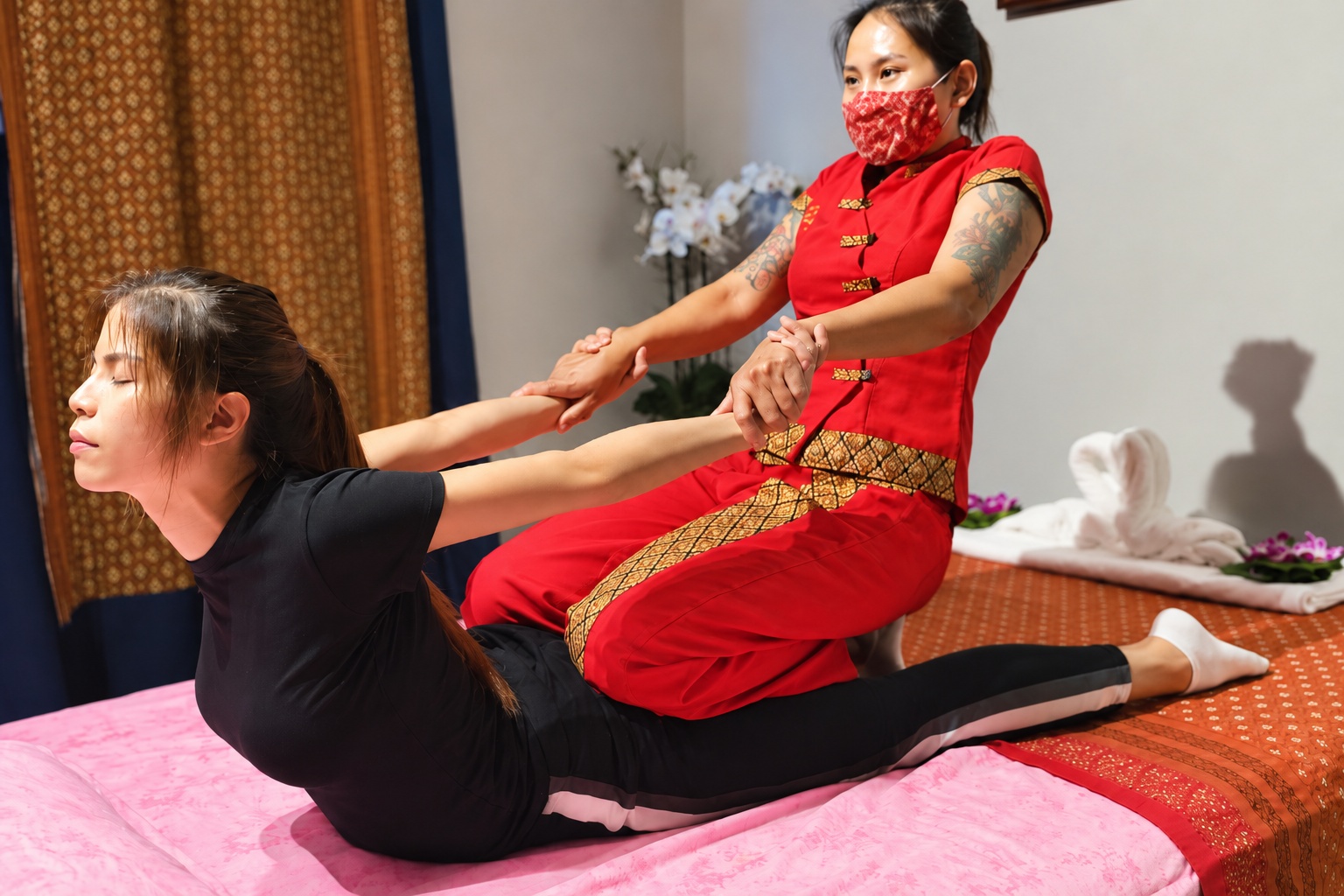
Choosing between Thai oil massage and traditional Thai massage is less about finding the stronger treatment and more about deciding how you want the session to feel. Would you prefer flowing work with oil while resting on a table, or pressure through clothing with guided stretches and position changes?
Both styles may support relaxation and ease the feeling of everyday muscle tension. Neither needs to hurt, and neither guarantees a particular result. Here is a practical comparison to help you choose your next massage in Edmonton.
The main difference: flowing strokes or assisted movement
Thai oil massage combines oil-based massage strokes with Thai-influenced pressure techniques. Oil helps the therapist glide over the skin. A session is commonly table-based, with appropriate draping and only the area being worked on uncovered. Ask about the treatment setup and draping before your appointment if you have a preference.
Traditional Thai massage, often called Thai yoga massage, typically uses rhythmic compression, supported positions and assisted stretches rather than oil-based gliding. It is generally performed through comfortable clothing. Although traditionally associated with a floor mat, the setup can vary by clinic and treatment.
Browse the Thai Oil Massage service and Thai Yoga Massage service for the options at Siam Thai Yoga Massage.
How each style may feel
Thai oil massage: more continuous contact
If you enjoy smooth, flowing strokes and prefer fewer position changes, oil massage may suit you. Pressure can still vary: oil does not automatically mean light pressure, and a calming pace does not require deep work. Tell your therapist whether you want gentle touch or more focused attention to a comfortable area.
Traditional Thai massage: more guided movement
If you like the idea of assisted stretching and pressure through clothing, traditional Thai massage may be a better match. You do not have to be flexible or have yoga experience. The therapist should adapt the movement to you, not ask you to achieve a particular pose. You can decline any stretch, ask for less pressure or stop at any point.
Which one should you choose?
- Prefer to stay clothed? Ask about traditional Thai massage and what clothing to bring.
- Enjoy oil-based table massage? Thai oil massage may be the more familiar option.
- Like assisted movement? Consider traditional Thai massage, with stretches adapted to your range.
- Prefer to lie still? Ask for an oil massage with a quiet pace and minimal position changes.
- Have sensitive skin or fragrance sensitivities? Ask which products are used before booking an oil treatment. Do not assume every oil is suitable for you.
Pressure is a separate choice from massage style. A traditional Thai session can be gentle, and an oil session can include firmer work. There is no need to choose the most intense treatment to make your appointment worthwhile.
What to mention before your session
Explain what feels tight, what movements are uncomfortable and what you want from the appointment. Let the therapist know about recent injuries or surgery, pregnancy, skin irritation, allergies, blood-thinning medication, osteoporosis or any condition that could affect pressure or stretching. Some situations need a modified session, a different treatment or advice from your healthcare professional first.
Massage is not a substitute for assessment of unexplained or worsening symptoms. Postpone treatment if you have a fever or contagious illness. Sudden severe pain, new weakness or numbness, or unexplained one-sided swelling should be medically assessed rather than worked on with massage.
During either style, speak up about sharp pain, tingling, dizziness or a feeling that a joint is being pushed too far. Ask the therapist to stop or adjust. Comfortable communication matters more than tolerating a technique.
Preparing for your visit
For traditional Thai massage, ask whether to bring loose, flexible clothing. For oil massage, discuss draping, product ingredients and any areas you prefer not to have treated. You can also request a quieter session or ask the therapist to explain position changes before they happen.
Afterward, give yourself a little time to notice how you feel before returning to strenuous activity. Drink normally according to thirst; there is no need for a special detox routine. If symptoms persist or worsen, seek healthcare advice rather than assuming they are a necessary part of massage.
Choose your massage in Edmonton
The best starting point is the experience you prefer today: flowing oil-based touch, or clothed pressure with supported movement. If you are undecided, review our massage services and ask which option fits your comfort and needs.
Ready to plan your visit? Book your massage at Siam Thai Yoga Massage and choose an available treatment and appointment time.